

Designing a children’s clothing store is fundamentally different from designing any other retail space. You’re not just creating a shopping environment — you’re building a dual-audience experience that must win over two decision-makers at once: parents (who hold the wallet) and children (who hold the emotional leverage).
Get it right, and you’ll create a destination that families return to again and again. Get it wrong, and you’ll watch parents rush through your store while toddlers meltdown in the aisles.
This comprehensive guide covers everything you need to know about children’s clothing store design — from store layout and display fixtures to color psychology and visual merchandising strategies that drive sales.
Why Children’s Clothing Store Design Matters More Than You Think
The global children’s apparel market reached $225.88 billion in 2026 and is growing at 7.17% CAGR. With this growth comes fierce competition. Your store design is your most powerful competitive weapon — it’s the first impression, the brand statement, and the silent salesperson working 24/7.
Research consistently shows that store layout and visual presentation influence 70-80% of purchase decisions in retail. For children’s clothing specifically, the stakes are even higher:
- Parents judge quality by environment — A clean, well-organized store signals quality merchandise, even before they touch a garment.
- Children create the “stay factor” — A kid-friendly space keeps families in your store longer, and longer visits mean more sales.
- Social media visibility is currency — A photogenic store interior drives organic Instagram and TikTok content from customers.
1. Store Layout: The Foundation of Your Design Strategy
Zoning by Age Group
The most effective children’s clothing stores divide their space into distinct zones based on the age of the end customer. Each zone should have its own atmosphere, fixture height, and visual language:
| Age Group | Design Approach | Key Considerations |
|---|---|---|
| Infants (0-2) | Soft, warm, premium | Parents buy emotionally — use pastel colors, gentle lighting, and premium materials |
| Toddlers (2-6) | Playful, colorful, interactive | Include play areas, low display heights, rounded edges on all fixtures |
| Kids (7-12) | Trendy, expressive, aspirational | Use mannequins, trending themes, and peer-influencing displays |
| Teens (13-16) | Fashion-forward, semi-independent | Create a “boutique-within-a-boutique” feel with subdued, adult-like styling |
The “Stroller-Friendly” Layout
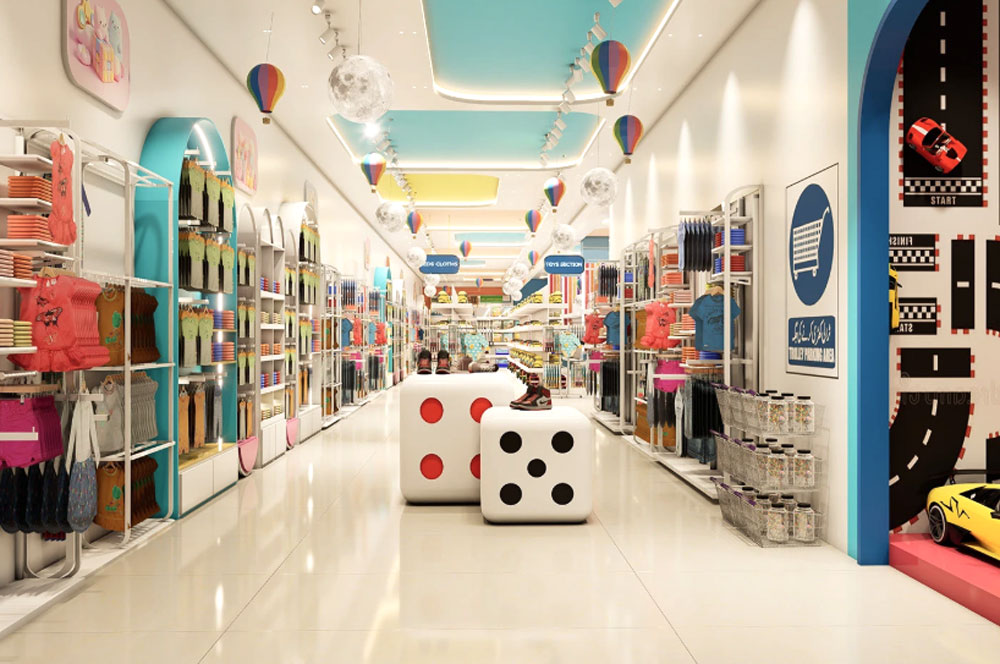
One of the most overlooked aspects of children’s store design is aisle width. Your primary customers often arrive with strollers, baby carriers, and toddlers in tow. Design main aisles at minimum 1.2 meters (4 feet) wide to accommodate stroller traffic. Wider aisles also create a more spacious, premium feel that appeals to parents.
The Customer Journey Flow
Guide customers through your store using a logical flow:
- Entry zone — Eye-catching window displays and featured new arrivals
- Transition zone — Bestsellers and promotional items (first 2-3 meters from entrance)
- Core shopping zone — Organized by category (boys, girls, accessories, shoes)
- Engagement zone — Play area, seating for parents, fitting rooms
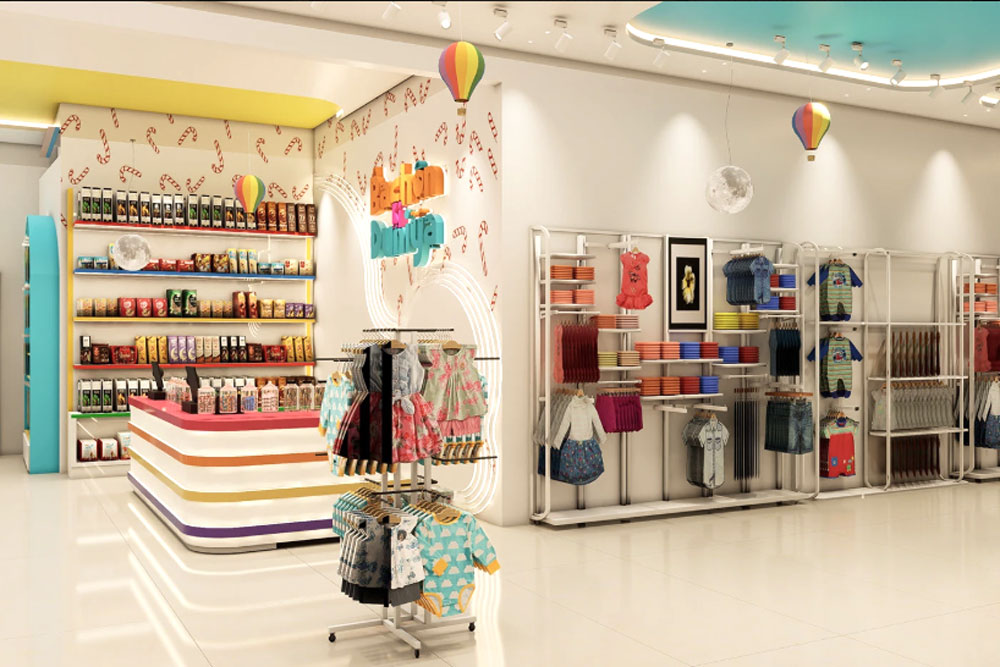
- Checkout zone — Impulse items near the register (accessories, socks, hair accessories)
Pro Tip: Place high-margin items like accessories at children’s eye level near the checkout. Kids will spot them and make their requests — and parents often say yes to small items.
2. Display Fixtures: Choosing the Right Furniture for Your Store
Wall Display Systems
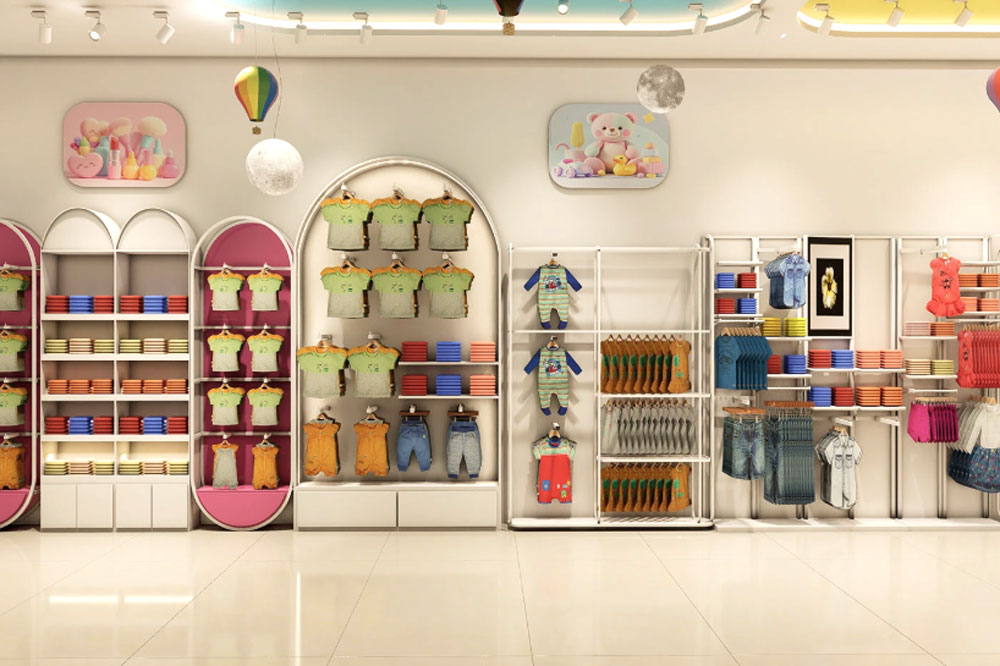
Wall-mounted shelving and hanging systems maximize your vertical space while keeping the floor clear for traffic flow. For children’s clothing stores, consider:
- Adjustable shelving — Children’s clothing comes in a wide range of sizes and folded formats. Adjustable shelves let you reconfigure as your inventory changes seasonally.
- Slatwall systems — Versatile and cost-effective, slatwall panels support hooks, shelves, and brackets that can be rearranged without tools.
- Pegboard displays — Ideal for hanging accessories like hair clips, hats, and small items at varying heights.
Floor Display Fixtures
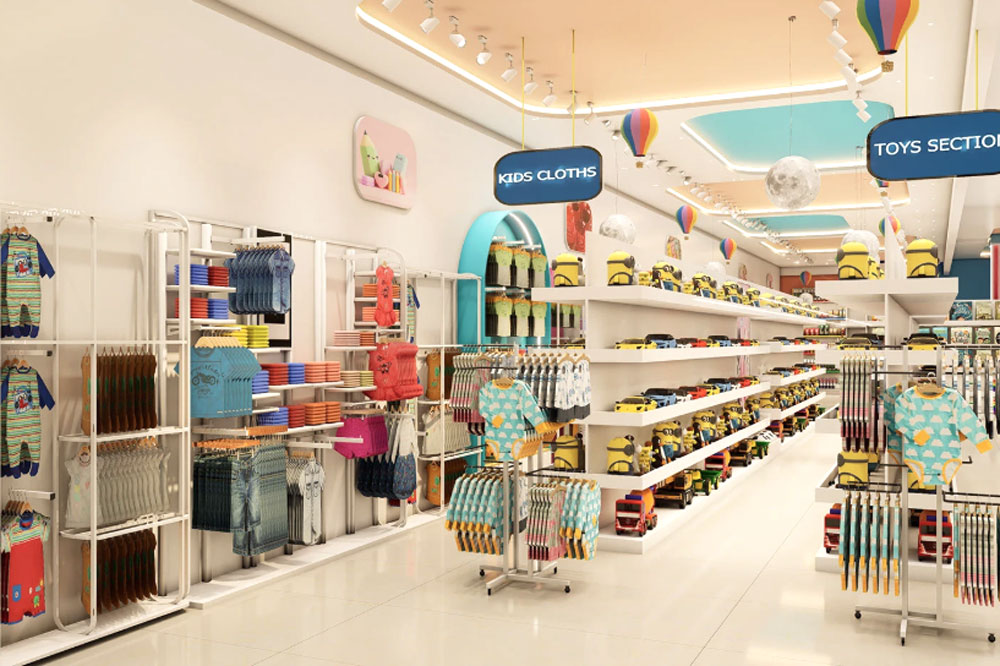
- Circular clothing racks — These create natural browsing paths and allow customers to view garments from all angles. Use shorter racks (100-120cm) for the children’s section to maintain sight lines.
- Display tables with storage — Folding display tables with built-in drawers or shelves underneath serve double duty: showcasing featured items above and storing extra inventory below.
- Low-profile bins and baskets — Place these at children’s height (60-80cm) to encourage kids to explore independently.
Specialty Display Solutions
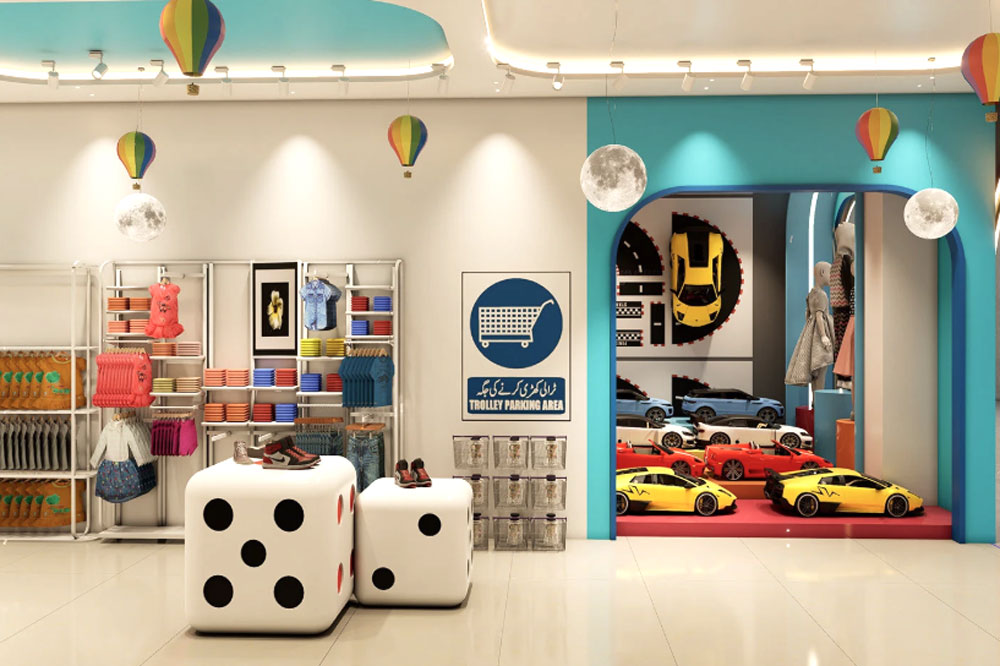
- Mannequins — Use child-sized mannequins styled in complete outfits. Outfits on mannequins sell significantly better than those hanging on racks because parents can visualize the complete look.
- Window displays — Your storefront is your most valuable advertising space. Rotate window displays monthly and align them with seasons, holidays, and trending themes.
From BDF Display: We manufacture custom display fixtures specifically designed for children’s clothing stores — including adjustable wall systems, modular floor displays, and child-safe rounded-edge furniture. All fixtures come with free professional design and 3D rendering so you can visualize your store before committing to production.
3. Color Scheme & Visual Atmosphere
Color Psychology for Children’s Retail
Color choices in a children’s clothing store directly impact purchasing behavior. Here’s what the research tells us:
- Pastels (mint green, soft pink, baby blue) — Create a calm, premium atmosphere ideal for infant and toddler sections. These colors appeal to parents seeking quality and safety.
- Bright accents (yellow, orange, red) — Use sparingly as accent colors to draw attention to promotional displays and high-energy areas. Studies show warm colors increase impulse purchasing.
- Neutral bases (white, light gray, natural wood) — A neutral base palette keeps the focus on the merchandise and prevents visual overwhelm. Use this as your primary wall color and let the clothing provide the color.
The 60-30-10 Rule
A proven approach to store color design:
- 60% neutral base — Walls, ceilings, and large fixture surfaces
- 30% secondary color — Accent walls, display backdrops, and fixture detailing
- 10% bold accents — Decorative elements, signage, and seasonal displays
Lighting: The Invisible Design Element
Lighting can make or break a children’s clothing store. Layer your lighting for maximum impact:
- Ambient lighting — Even, general illumination (300-400 lux) to create a bright, welcoming atmosphere
- Accent lighting — Focused spotlights on featured displays and mannequins to create visual hierarchy
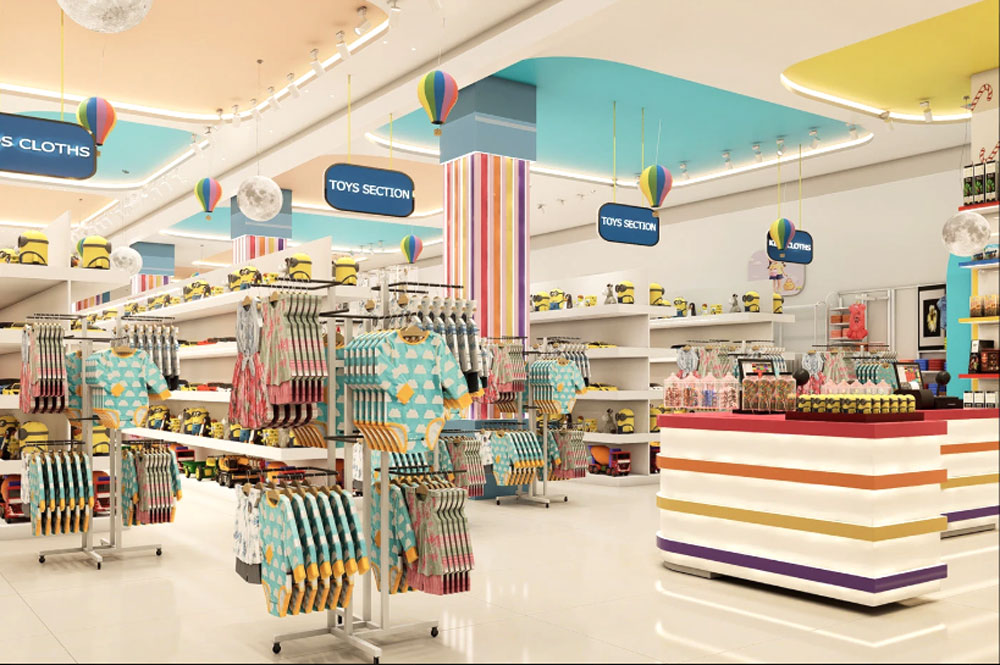
- Decorative lighting — Fun pendant lights, LED strips, or themed fixtures that add personality and delight children
Avoid harsh fluorescent lighting — it creates an unflattering environment and can make the space feel institutional. Warm-white LED lighting (3000K-3500K) creates the most flattering, inviting atmosphere for both merchandise and customers.
4. Creating a Kid-Friendly Experience
The Play Area: Your Secret Sales Weapon
This is perhaps the single most impactful design decision you can make for a children’s clothing store. Here’s why:
When children are happily engaged, parents shop longer and spend more. A well-designed play area with a small table, chairs, coloring supplies, and maybe a few toys transforms your store from “somewhere mom drags us” to “that fun shop we visit.”
Play area design tips:
- Position it where parents can see their children from the shopping area
- Use easy-to-clean, durable materials
- Include age-appropriate activities (coloring for toddlers, interactive screens for older kids)
- Keep it contained — you want kids playing, not running through clothing racks
Fitting Rooms
Many children’s clothing stores underestimate the importance of fitting rooms. Parents need to see how clothes fit before purchasing, and a pleasant fitting room experience directly impacts conversion rates.
- Provide fitting rooms with full-length mirrors at both adult and child heights
- Include a small bench or chair for parents
- Add fun mirror decals or stickers to make trying on clothes exciting for kids
- Ensure adequate lighting that accurately represents garment colors
Parent Comfort Features
Small touches that show you understand your customers:
- Seating areas — A comfortable bench or sofa near the play area
- Stroller parking — A designated area near the entrance
- Changing stations — In restrooms if available
- Water station — A small water dispenser or vending machine
5. Visual Merchandising Strategies That Drive Sales
Merchandise by Size, Not Just Category
Parents expect to find clothing organized by size first, then by style. Clear size signage and organized displays reduce frustration and make shopping efficient. Consider color-coding size sections or using branded size markers on display fixtures.
Cross-Merchandising
Display complete outfits rather than individual items. A shirt displayed with matching pants, shoes, and accessories creates an aspirational look and encourages multi-item purchases. This is where mannequins become essential — they tell a complete style story.
Seasonal and Thematic Displays
Rotate your displays regularly to create a sense of freshness and urgency:
- Back-to-school (July-August) — Display complete school outfits, backpacks, and accessories
- Holiday collections — Feature themed clothing and gift-ready packaging
- Spring/summer transitions — Showcase lighter fabrics and brighter colors
- Clearance events — Designate a clearly marked area to draw bargain hunters without disrupting the premium shopping experience
The Power of Storytelling
The most successful children’s brands don’t just sell clothes — they sell a lifestyle. Create narrative displays that tell a story: “A Day at the Park,” “Birthday Party Ready,” or “First Day of School.” Themed displays help parents envision moments and create emotional connections with your merchandise.
6. Store Front & Exterior Design
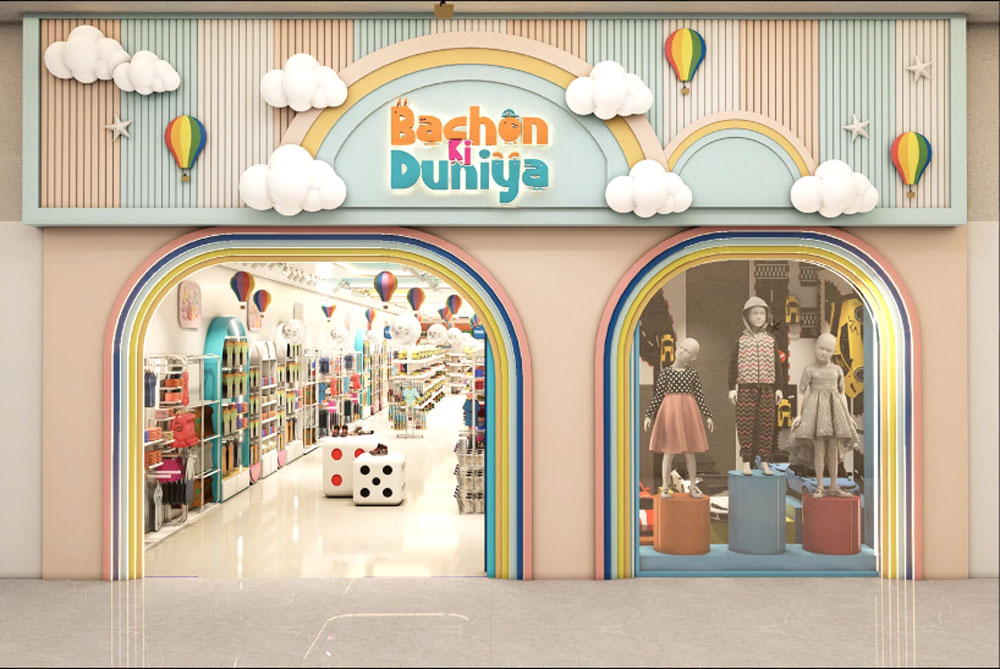
Your storefront is your 24/7 advertisement. It must communicate your brand identity and attract families before they even step inside.
Key Exterior Elements:
- Clear, legible signage — Your store name should be visible from across the street. Use playful fonts and colors that match your brand personality
- Window displays — Update monthly with seasonally relevant themes and complete outfit presentations
- Welcoming entrance — Keep the entrance clean, uncluttered, and inviting. Avoid blocking the door with fixtures or signage
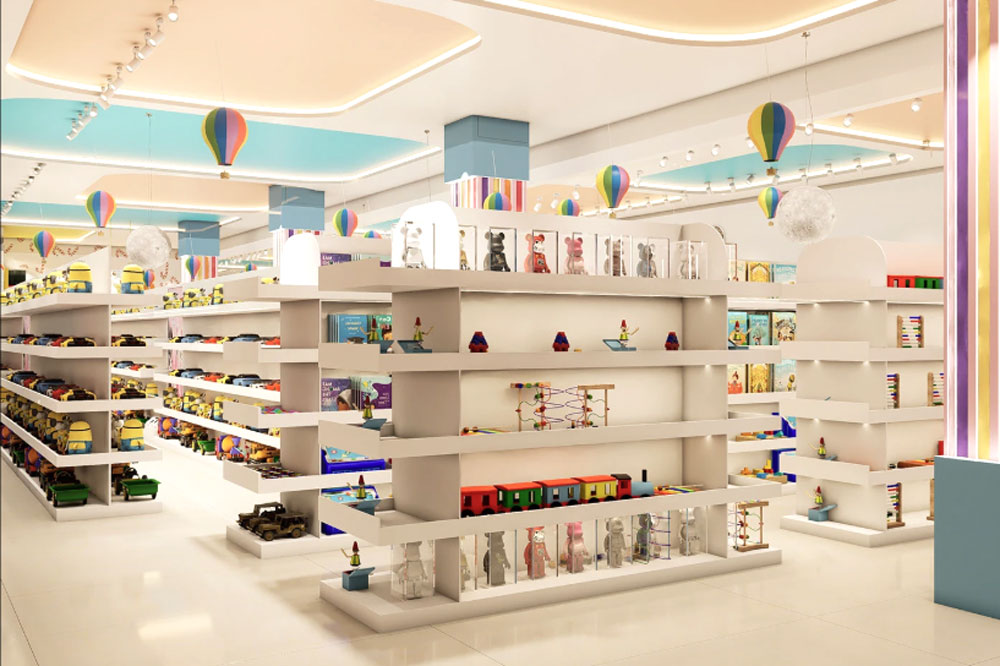
- Thematic elements — Consider adding a recognizable character or motif (animal shapes, cloud designs) that makes your store memorable to children
7. Common Mistakes to Avoid
Based on our experience designing hundreds of children’s clothing stores worldwide, here are the most frequent design errors:
| Mistake | Impact | Solution |
|---|---|---|
| Narrow aisles | Strollers can’t pass; frustrated parents leave | Minimum 1.2m aisle width |
| Cluttered displays | Store feels overwhelming and cheap | Edit displays regularly; less is more |
| Poor lighting | Garments look unappealing; photos look bad | Invest in layered, warm lighting |
| No play area | Kids get bored; parents rush purchases | Dedicate 5-10% of floor space to play |
| Sharp edges on fixtures | Safety hazard for children | Use rounded-edge fixtures throughout |
| Ignoring the “dead zones” | Wasted retail space | Use decorative fixtures or seasonal displays in corners |
| Static displays | Store feels stale; repeat visitors lose interest | Rotate displays every 3-4 weeks |
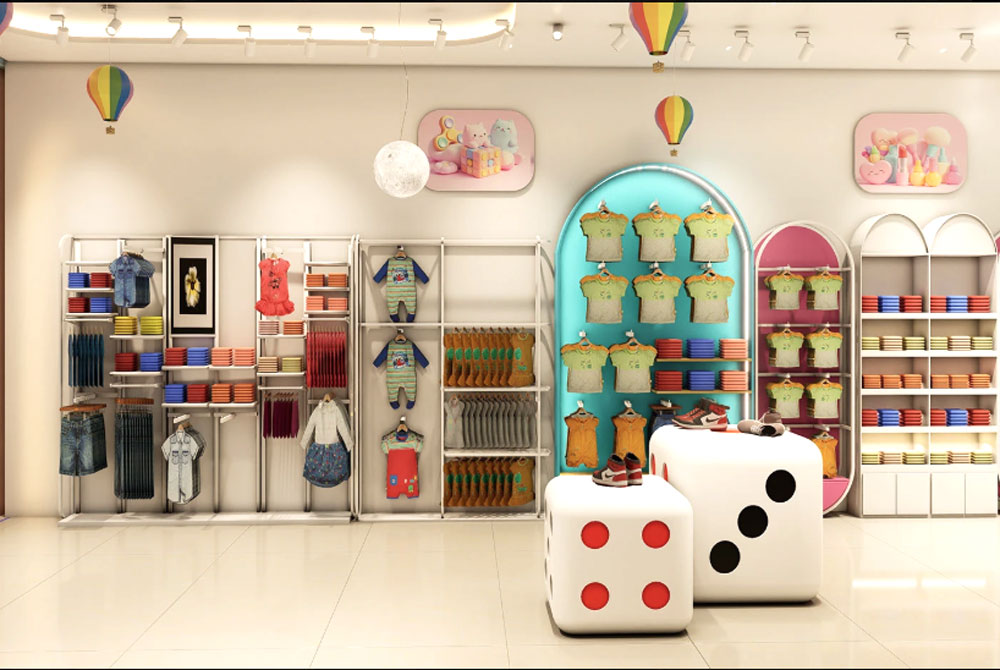
How BDF Display Helps You Build the Perfect Children’s Clothing Store
At BDF Display, we specialize in manufacturing custom display fixtures and providing comprehensive store design services for children’s clothing retailers worldwide. Here’s what sets us apart:
Our Service Includes:
- Free Professional Store Design — Our experienced design team creates customized layout plans tailored to your space, brand identity, and target market
- 3D Rendering & Visualization — See your complete store design in photorealistic 3D renders before any production begins. Make adjustments, explore options, and feel confident in your investment
- Custom Fixture Manufacturing — From wall display systems and clothing racks to checkout counters and display tables, every piece is manufactured to your specifications
- Material Sourcing & Matching — We help you select the perfect materials — wood, metal, acrylic, or composite — that match your brand aesthetic and durability requirements
- Global Shipping — We deliver worldwide with professional packaging to ensure your fixtures arrive in perfect condition
What We Don’t Do:
We focus exclusively on design and fixture supply. We do not handle on-site construction or installation. This allows us to offer competitive factory-direct pricing while maintaining the highest quality standards in fixture manufacturing.
Get Started Today:
Ready to transform your children’s clothing store? Contact our design team for a free consultation and 3D store rendering.
📧 Email: info@bdfdisplay.com
📱 WhatsApp: +XXXX
🌐 Website: https://bdfdisplay.com
👉 Get a Free Design Quote: Contact Us
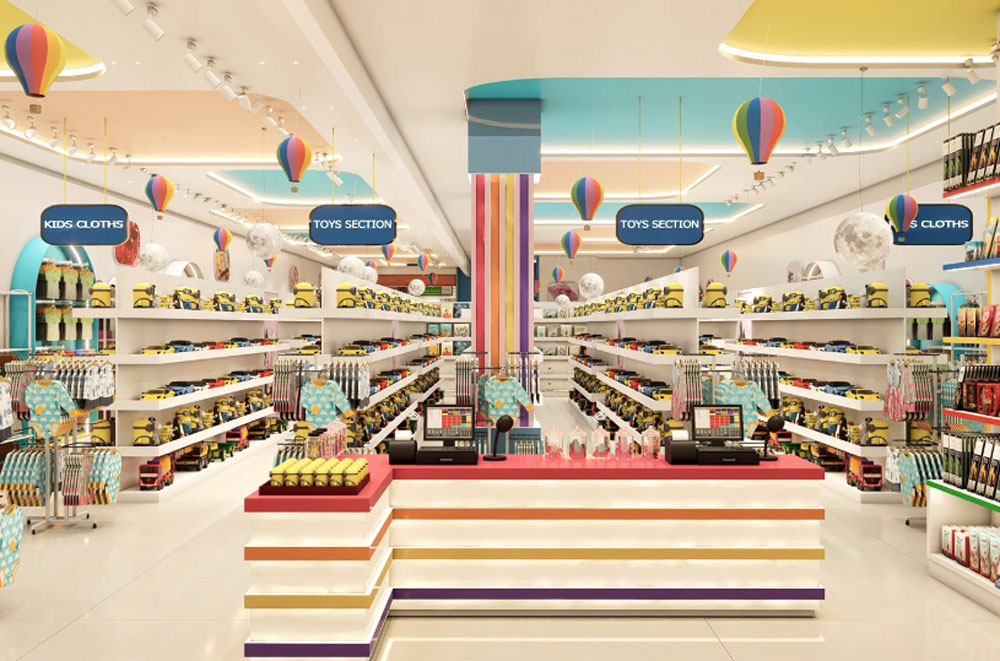
Conclusion
Designing a successful children’s clothing store requires balancing the needs of two distinct audiences — parents who value quality, organization, and convenience, and children who crave fun, color, and engagement. The stores that master this balance become family destinations, not just retail spaces.
By investing in thoughtful store layout, child-friendly display fixtures, strategic lighting, and engaging visual merchandising, you create an environment that drives longer visits, higher average order values, and loyal repeat customers.
The children’s apparel market is growing — make sure your store is designed to capture your share of that growth.
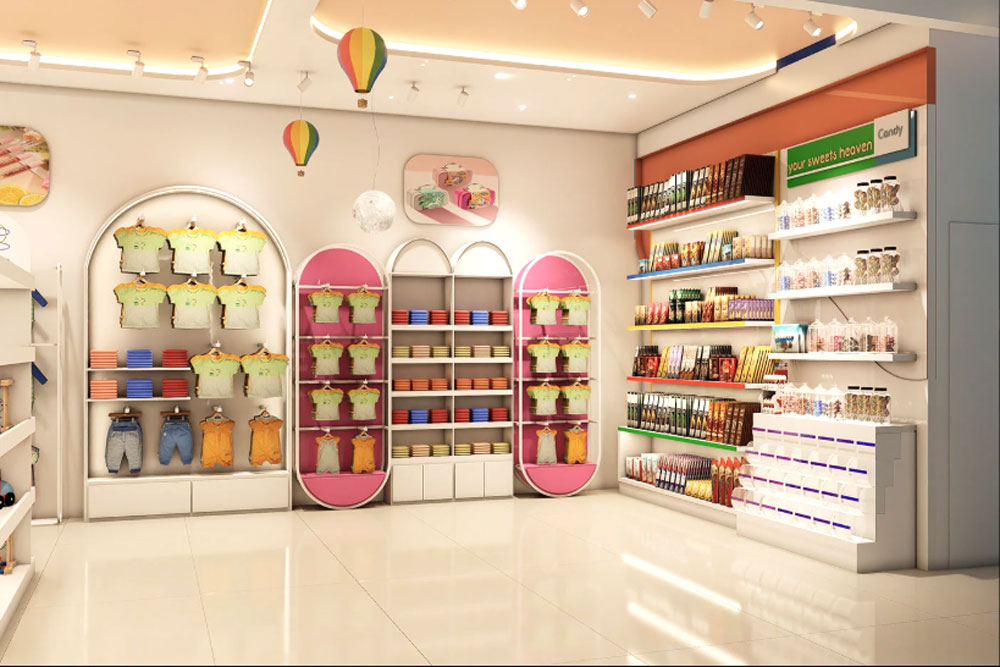
FAQs
Q: How much does children’s clothing store design cost?
A: Design costs vary based on store size and complexity. At BDF Display, we offer free store design and 3D rendering with fixture orders — contact us for a customized quote.
Q: What are the most popular color schemes for kids’ clothing stores in 2026?
A: Neutral bases (white, light gray, natural wood) with pastel accents (mint green, soft pink, baby blue) remain the top choice. Bold accent colors are used sparingly for promotional areas.
Q: How often should I redesign my store layout?
A: A complete redesign every 3-5 years is typical, but you should refresh displays and visual merchandising every 3-4 weeks to keep the shopping experience engaging.
Q: Do you provide on-site installation services?
A: BDF Display specializes in design and fixture manufacturing. We provide detailed assembly guides with every order. On-site construction and installation should be arranged with local contractors.
Q: What’s the minimum order quantity for custom display fixtures?
A: We accommodate orders of all sizes. Contact our team to discuss your specific needs — we’re happy to work with both single-store startups and multi-location retail chains.